
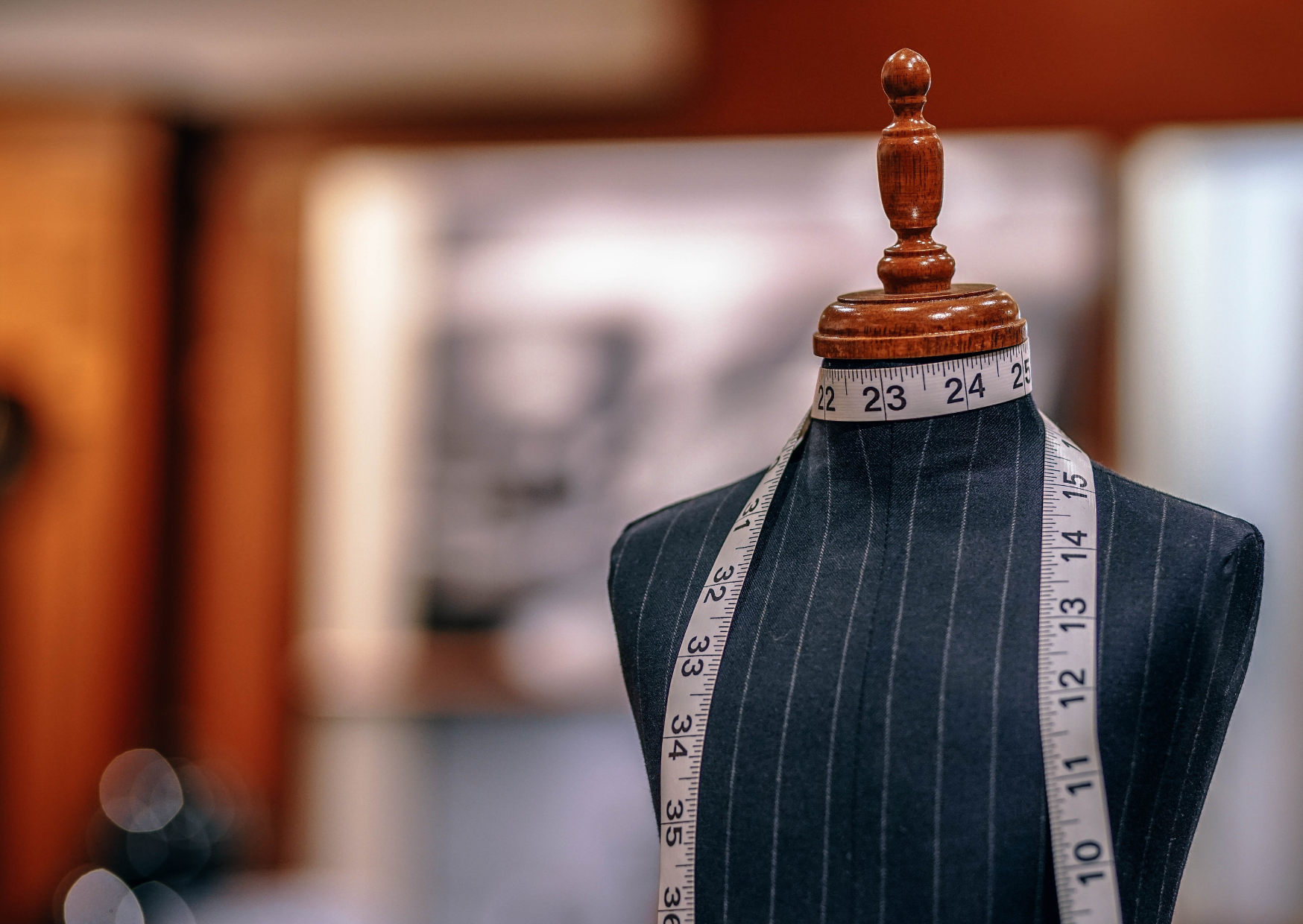
An eponymous fashion brand is a label named directly after its founder, creator or designer. Around the world, some of fashion’s most famous houses carry a designer’s name, and Nigeria is no different.
Nigeria’s vibrant fashion industry has produced world-class designers who have built successful eponymous brands, including:
- Deola Sagoe: the haute couture label of Deola Ade-Ojo (née Sagoe), known globally for her Komole and Aso-Oke collections.
- Lisa Folawiyo: named after its creator, who transformed Ankara into hand-embellished luxury fashion.
- Kenneth Ize: the label of the LVMH Prize finalist known for bringing handwoven Aso-Oke to international runways.
- Veekee James: the designer’s own name, behind one of Nigeria’s best-known bridal and custom couture brands.
- Tokyo James: the moniker of a British-Nigerian luxury menswear designer.
- Abiola Olusola: a minimalist womenswear label named after its founder.
Some designers adapt their names to create a brand. Andrea Iyamah was founded by Dumebi Iyamah, who chose her middle name, Andrea, to headline the label. Atafo, originally launched as Mai Atafo Inspired, was later shortened to the designer’s surname.
Many emerging Nigerian designers go further still, building brands around a first name alone.
For all of these brands, the name is the brand. It signals a particular eye, a signature style and a personal story customers buy into. But a brand built on a person’s name raises two important legal questions:
- Who owns that name, and what happens to it if the designer leaves, sells or takes on investors?
- Can a name shared by many other Nigerians really be protected as a brand?
Part 1: When the designer and the brand part ways
The European lesson: you can keep the name, but not the illusion
In a 2026 ruling, the Court of Justice of the European Union considered the trademarks of French designer Jean-Charles de Castelbajac. After his company became insolvent, the marks bearing his name passed to a new owner. He worked with them briefly, then left. The new owner kept selling clothing under his name, including designs whose copyright he still owned, and he challenged the marks as misleading.
The Court held that:
- a business can keep using a departed designer’s name as a trademark, because consumers understand that eponymous labels are not always run by their namesake;
- but it cannot use the name in a way that falsely suggests the designer is still creating the products, for example through advertising or by copying the designer’s signature style;
- if it does, the trademark can be revoked for misleading the public, even where the rights in the name were properly transferred.
In short: a business can buy a designer’s name, but not the impression that the designer is still behind the work.
Why this matters in Nigeria now
Nigerian fashion is entering a new stage. Designer-led brands are taking on investors, forming partnerships, opening stores and selling stakes. Each of these moments raises the question of who controls the name. Common scenarios include:
- a designer sells a majority stake to an investor, then later leaves;
- co-founders fall out, and one wants to keep using a name associated with the other;
- a designer registered the brand in a company’s name years ago and only discovers this when they want to leave;
- a business keeps marketing with the founder’s face and signature style after the founder has moved on.
How Nigerian law approaches this
- Trademark ownership: under the Trade Marks Act, whoever owns the registration owns the mark, not necessarily the person whose name it is. If your company registered your name as a brand, the company owns it, and if you sell the company, the name may go with it.
- Deception: Nigerian trademark law guards against marks that are likely to deceive or cause confusion, and registrations can be challenged and corrected in appropriate cases.
- Passing off: a designer may bring a passing off claim if a business falsely represents that its goods are connected with them, for example “new collection by [designer]” when they had no involvement.
- Copyright: selling a business does not automatically transfer copyright in the designer’s sketches, prints and artwork. Under the Copyright Act 2022, assignments must be in writing.
- Consumer protection: the Federal Competition and Consumer Protection Act 2018 prohibits misleading representations about goods, which can include falsely implying a designer’s involvement.
Part 2: Nigerian names, culture and the challenge of protection
Nigerian names are rich with meaning. Many carry family history, praise (oríkì), faith or the circumstances of a child’s birth. Names such as Olamide, Oluwatoba, Adaeze, Ngozi or Rolake are deeply personal, but they are also shared by many thousands of people. That creates particular challenges for eponymous brands.
1. Common names are harder to register
Trademark law protects signs that distinguish one trader’s goods from another’s. Ordinary surnames and common first names are treated with caution, because many people share them. Under the Trade Marks Act, a personal name or surname is generally registrable only if it is presented in a distinctive way, for example in a stylised logo or as a signature, or if it has become distinctive through use. A brand built on a single common first name may struggle to be registered on its own, and even if registered, its protection may be narrow.
2. Other people may honestly use the same name
Nigerian trademark law generally allows people to make honest use of their own name. If another designer genuinely shares your name, it may be difficult to stop them trading under it, even if you registered first. Your protection is strongest against those who copy your name to trade on your reputation, not against everyone who shares it.
3. Family and cultural names carry sensitivities
Some names belong to a family or lineage as much as to an individual: compound family names, praise names and names tied to a community or chieftaincy. Registering such a name as a commercial brand can create tension with relatives or communities who feel a shared claim to it. Before building a brand on a family name, it is worth discussing it openly with those it belongs to.
4. Names change, but brands endure
Many designers, particularly women, change their surname on marriage. A brand built on a maiden name can continue to thrive, as Deola Sagoe shows, but the brand name and the designer’s legal name may then differ. That makes clear documentation of who owns the brand especially important.
5. Designers can shape their names into stronger brands
Nigerian designers have found creative ways to build distinctive brands from their names: a middle name (Andrea Iyamah), a surname alone (Atafo) or a moniker (Tokyo James). Choices like these can make a name more distinctive and easier to protect, while keeping the personal connection customers value.
How to build a protectable name brand
- Make it distinctive: combine names, use a middle name or moniker, add a distinctive word, or use a stylised logo or signature.
- Search before you launch: check the Trademarks Registry, Instagram, TikTok and online marketplaces for others already using the name in fashion.
- Register early: file in Class 25 (clothing), and in Classes 18 and 14 if you sell bags or jewellery.
- Build reputation: consistent use, marketing and press coverage help a name become distinctive over time.
What designers should do
- Decide who owns your name as a brand. Consider registering it in your own name and licensing it to your company, so that it can stay with you if you leave.
- If the company must own it, negotiate protections in your shareholder or exit agreement: a buy-back right, limits on post-exit use of your name and image, or approval rights over marketing.
- Keep copyright in your signature designs unless you deliberately assign it, and keep dated records.
- Protect your future: make sure any agreement lets you keep working under your own name.
What brands and investors should do
- Secure the full package: acquire the trademark and written copyright assignments for key designs, archives and prints.
- Plan the transition honestly: “founded by” is generally fine; “designed by” or “new collection from” is not, if the designer is no longer involved.
- Don’t trade on their identity: avoid using the designer’s image or signature aesthetic in ways that suggest ongoing involvement.
- Build beyond the person: create a house identity that can outlast the founder.
A checklist for eponymous fashion brands
- ☐ Check whether your name is distinctive enough to register, and make it more distinctive if needed
- ☐ Search the Registry and the market before launch
- ☐ Confirm who owns the trademark registration
- ☐ Discuss family or cultural names with those who share them
- ☐ Document brand ownership clearly, especially if your legal name changes
- ☐ Include name, image and exit provisions in shareholder and investment agreements
- ☐ Put copyright assignments in writing
- ☐ Check all “designed by” and “collection by” claims are true
How Cardinal Counsel can help
Cardinal Counsel advises Nigerian designers, fashion founders and investors on trademark registration and ownership, licensing, shareholder and exit agreements, and brand protection. Whether you are building a brand around your name or investing in one, we help structure ownership so both the brand and the person behind it are protected. If you are raising investment, also see our guide to funding fashion in Nigeria.
Building or investing in a designer-led brand? Contact us at info@cardinalcounsel.co.
This article provides general information and is not legal advice.