
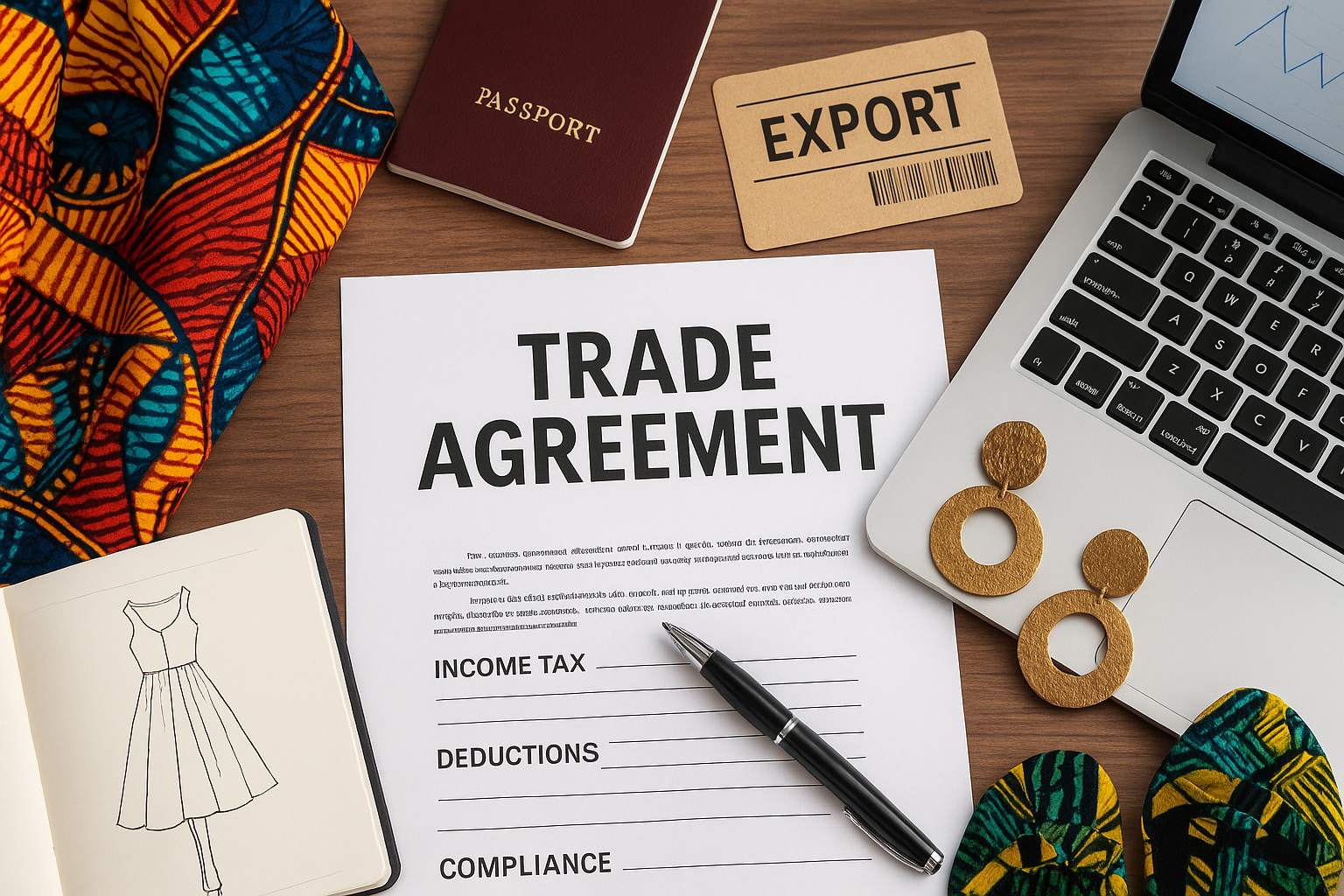
The African fashion industry has moved from being a cultural niche to becoming a global phenomenon. Nigerian, Ghanaian, South African, Kenyan, and other African designers now feature in international fashion weeks, collaborate with luxury houses, and sell to consumers worldwide. Despite the creative brilliance of African fashion, one of the major hurdles remains scaling exports in a competitive global market.
To achieve this, trade agreements play a critical role. They provide structured frameworks that lower tariffs, simplify customs procedures, and create legal certainty for businesses looking to enter new markets. For African fashion brands, the ability to leverage trade agreements can be the difference between struggling to cover export costs and thriving in international markets.
At Cardinal Counsel, we advise fashion businesses on navigating international trade law, intellectual property, and export frameworks. This article unpacks the opportunities and challenges of trade agreements for African fashion exports and highlights what designers, policymakers, and industry players need to know.
1. Why Trade Agreements Matter for African Fashion
Trade agreements are legal frameworks negotiated between countries or regions to encourage cross-border trade. They typically reduce tariffs (taxes on imports and exports), address non-tariff barriers, and create preferential market access for businesses.
For fashion brands, this means:
- Cheaper exports → Reduced tariffs make it more affordable to ship garments abroad.
- Simplified logistics → Customs procedures are harmonised, reducing delays.
- Market access guarantees → Ensuring African brands can sell in high-demand regions like Europe, North America, and Asia.
- Stronger competitiveness → African designers can price competitively against brands from countries with existing trade advantages.
The African fashion industry has moved from being a cultural niche to becoming a global phenomenon. Nigerian, Ghanaian, South African, Kenyan, and other African designers now feature in international fashion weeks, collaborate with luxury houses, and sell to consumers worldwide. Despite the creative brilliance of African fashion, one of the major hurdles remains scaling exports in a competitive global market.
To achieve this, trade agreements play a critical role. They provide structured frameworks that lower tariffs, simplify customs procedures, and create legal certainty for businesses looking to enter new markets. For African fashion brands, the ability to leverage trade agreements can be the difference between struggling to cover export costs and thriving in international markets.
At Cardinal Counsel, we advise fashion businesses on navigating international trade law, intellectual property, and export frameworks. This article unpacks the opportunities and challenges of trade agreements for African fashion exports and highlights what designers, policymakers, and industry players need to know.
2. Current Challenges for Fashion Exports
While creativity is abundant, African fashion brands face structural challenges in export growth:
Intellectual Property Risks – African designers are often vulnerable to copying and design appropriation abroad.
High Tariffs and Duties – Exporting garments to Europe or the U.S. often incurs prohibitive tariffs, making African products less competitive.
Weak Infrastructure – Limited logistics and customs bottlenecks delay deliveries.
Lack of Awareness – Many designers are unaware of the trade agreements already available to them, such as AGOA.
Financing Gaps – Exporting requires upfront capital for production, compliance, and marketing, which many SMEs lack.
3. Trade Agreements Already Shaping Fashion Exports
Several trade frameworks already impact the fashion industry in Africa, though they are underutilised:
3.1 African Growth and Opportunity Act (AGOA)
The AGOA provides duty-free access for certain African products, including apparel, into the U.S. market. However, many African fashion brands are not leveraging this opportunity due to complex compliance requirements and lack of institutional support.
3.2 Economic Partnership Agreements (EPAs)
Some African countries benefit from preferential access to the EU market under EPAs. This can help fashion businesses looking to export luxury goods and textiles to Europe.
3.3 African Continental Free Trade Area (AfCFTA)
AfCFTA is the most ambitious agreement yet. By creating a single African market, it reduces intra-African tariffs and simplifies customs. This means fashion brands can first scale within Africa before entering global markets.
4. Unlocking AfCFTA’s Potential for Fashion
The African Continental Free Trade Area (AfCFTA) represents a powerful opportunity for the fashion industry. By removing tariffs and opening up borders, it creates a continental marketplace where designers can grow beyond their home countries. A Nigerian brand, for example, can sell directly to South Africa or Kenya without prohibitive duties, while also sourcing fabrics and accessories more easily from neighbouring markets. This integration not only strengthens supply chains but also makes African fashion more attractive to global investors, who see a unified market as less risky and more scalable.
Still, for the AfCFTA to reach its full potential in fashion, governments need to match ambition with action. Improved transport and logistics, harmonised product standards, and faster, more transparent customs systems are critical to ensuring that the promise of free trade translates into tangible benefits for designers and entrepreneurs.
5. Tackling Tariff and Non-Tariff Barriers
Even with AfCFTA, the reality is that African brands still face steep challenges when it comes to trade. Many pay duties on imported fabrics and trims, only to encounter further levies when exporting the finished garments. These layered costs limit competitiveness in international markets and push up prices for consumers.
To overcome this, trade policies must make it easier and cheaper for fashion businesses to produce and export. That means lowering import duties on essential raw materials, providing tax relief on exports, and addressing the red tape that comes with customs regulations. Excessive paperwork, inconsistent rules, and long approval times often discourage cross-border trade. Streamlining these processes would allow African brands to focus on what they do best—creating and delivering fashion that can compete on a global stage.
6. Protecting African Creativity Abroad
African fashion is admired worldwide, but too often its designs are copied by international retailers without credit or compensation. To prevent this exploitation, intellectual property in fashion across Africa must be safeguarded through stronger legal protections within trade agreements.
This means ensuring that IP trade agreements include binding clauses that specifically protect design rights for Nigerian brands and other African designers. Governments also need to negotiate the recognition of African trademarks and design rights abroad, so that legal protections extend beyond local borders. At the same time, designers themselves must be proactive by registering their IP both at home and in key export markets. Only with these layered protections can African creativity command the respect—and revenue—it deserves globally.
7. Financing Fashion Exports
Scaling African fashion for the world is not just about talent; it is about capital. Exporting requires significant investment in production, quality control, logistics, and international marketing. Without financing support, many SMEs cannot compete globally.
To change this, trade frameworks should be designed to make financing fashion exports in Africa more accessible. Options include low-interest loans, targeted export grants, and dedicated credit facilities for fashion businesses. Tax incentives can also reward export-focused designers, while Nigerian export loans and similar schemes across the continent could provide much-needed liquidity. Public–private partnerships are another critical tool, helping to co-fund international showrooms, exhibitions, and trade missions that put African brands on the global map.
8. Digital Trade and Fashion Exports
E-commerce has transformed global fashion, allowing African brands to reach customers directly through Instagram, Shopify, and online marketplaces. Yet challenges remain—from regulatory hurdles to payment bottlenecks and slow customs processes.
To keep pace with the digital economy, trade agreements must adapt. Rules for e-commerce fashion exports from Africa should be simplified, with digital tax systems that are fair but not burdensome for SMEs. Governments should also work with global payment gateways to ensure smoother cross-border transactions and negotiate faster customs clearance for small-value shipments. For Nigerian designers exploring online trade, these reforms would lower barriers and unlock the full potential of digital fashion trade law.
9. Partnerships and Retail Access
While government-led trade deals are essential, bilateral partnerships with global fashion capitals—Paris, Milan, New York, London—are equally vital. Such partnerships can secure retail collaborations with leading department stores and boutiques, guarantee quotas for African brands in international fashion weeks, and open doors to global distribution networks.
By prioritising African fashion retail partnerships in trade negotiations, policymakers can help ensure that Nigerian brands in Paris and other world hubs are not the exception but the norm. Access to international distribution channels will not only expand the market for African designers but also position the continent as a permanent force in global fashion.
Conclusion
The rise of African fashion on the global stage is undeniable. From Lagos to Johannesburg, African designers are creating trends that influence the world. Yet, for this creativity to translate into sustainable global business growth, the legal and trade environment must evolve.
Trade agreements tailored for fashion exports offer a pathway to unlock this potential. By reducing tariffs, protecting intellectual property, enhancing financing, and supporting digital trade, African nations can empower fashion brands to scale beyond borders.
At Cardinal Counsel, we support designers, brands, and creative entrepreneurs in navigating trade law, export contracts, and global partnerships. With the right legal guidance and policy reforms, African fashion can move from inspiration to domination in the global fashion economy.
If you are a fashion entrepreneur looking to expand through trade agreements, contact us today. Let’s chart the path for your brand’s global success.