
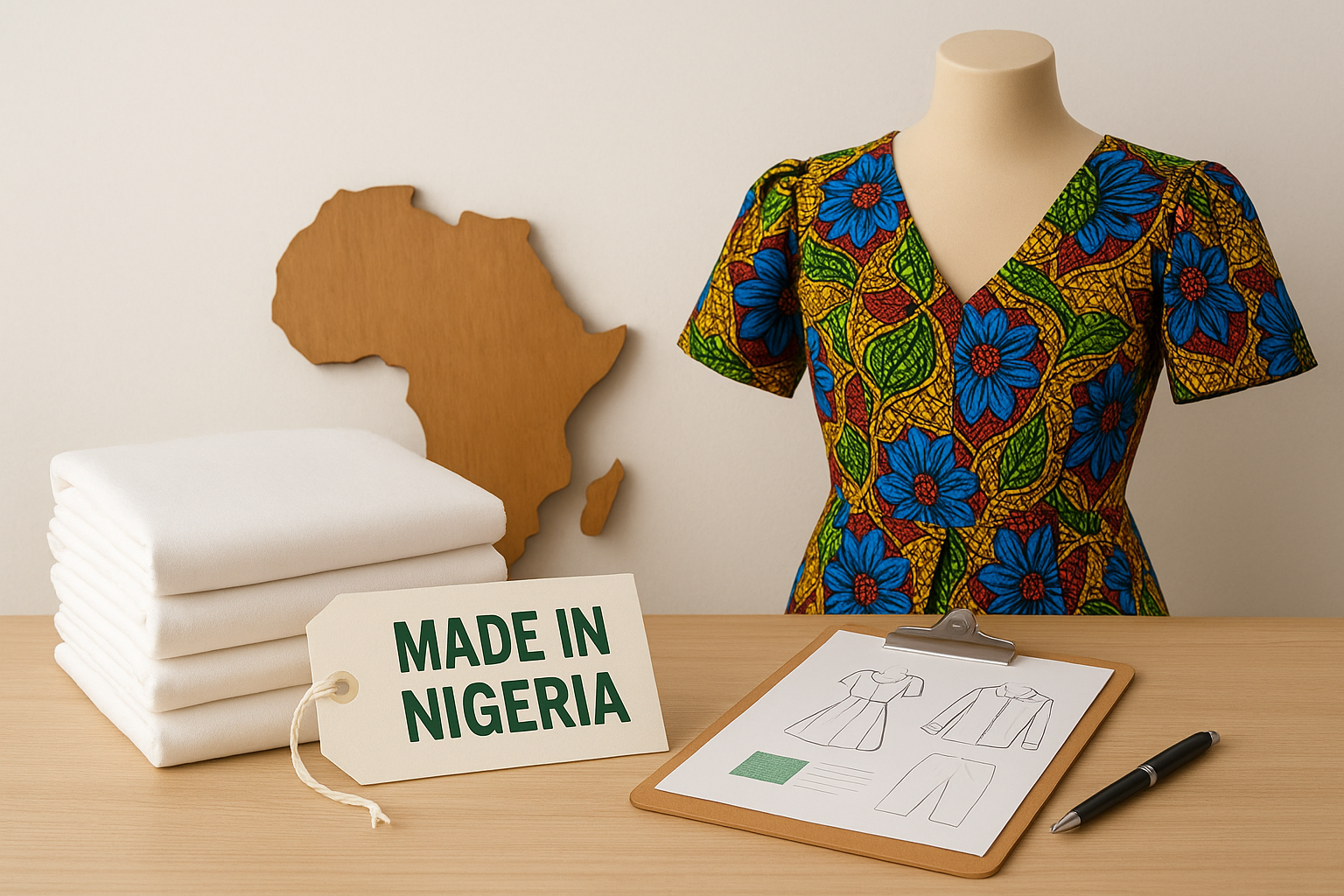
The label “Made in Nigeria” carries enormous weight. For consumers, it signals authenticity, cultural identity, and national pride. For designers, it is a mark of craftsmanship and originality that differentiates them in a global industry. And for the wider economy, it is a tool for export promotion, industrial growth, and positioning Nigeria as a creative powerhouse.
But what does “Made in Nigeria” truly mean? Just as the “Made in Italy” debate has forced Italian brands to confront questions about manufacturing transparency and consumer expectations, Nigerian fashion must grapple with how origin claims are defined, regulated, and understood.
This article explores the legal, commercial, and cultural dimensions of “Made in Nigeria”, examining what qualifies under trade law, how brands are using (and sometimes misusing) the term, and why clarity is essential for both consumer trust and Nigeria’s global fashion reputation.
1. The Legal Meaning of “Made in Nigeria”
1.1. International Trade Standards
Under World Trade Organization (WTO) rules and Nigerian trade law, a product’s country of origin depends on where it undergoes its last substantial transformation.
- Substantial transformation means a process that changes the name, character, or use of a product.
- Simply packaging or labeling an imported garment in Lagos would not qualify it as “Made in Nigeria.”
- If imported fabric is cut, sewn, and finished into a completely new garment within Nigeria, that may qualify.
Thus, the law focuses not on where raw materials are sourced but on where meaningful manufacturing or value-adding processes occur.
1.2. Nigerian Consumer Protection Regulations
The Federal Competition and Consumer Protection Commission (FCCPC) prohibits false or misleading claims of origin. A brand that markets imported stock as “Made in Nigeria” risks regulatory sanctions, reputational damage, and consumer backlash. This means that legal enforcement of origin claims in Nigeria is tied not just to trade law but also to consumer protection.
2. Industry Practice: How Fashion Brands Use “Made in Nigeria”
In practice, Nigerian fashion brands interpret “Made in Nigeria” in different ways:
- Full Local Production – Designers who source fabrics, employ Nigerian artisans, and finish garments entirely in Nigeria. These brands represent the strongest case for “Made in Nigeria.”
- Mixed Production – Brands that import textiles (e.g., Ankara prints from China) but cut, sew, and embellish garments in Nigeria. They often still market as “Made in Nigeria,” though the claim is less clear-cut.
- Minimal Local Input – Some brands import ready-made garments and only add labels or finishing touches locally. Marketing these as “Made in Nigeria” is misleading under trade and consumer law.
3. Why Defining “Made in Nigeria” Matters
3.1. Preserving Authenticity
Nigerian fashion is renowned for its indigenous textiles (Aso-Oke, Adire, Akwete), hand embroidery, and craft traditions. Loose or misleading use of “Made in Nigeria” risks eroding the cultural capital that underpins the industry.
3.2. Consumer Trust
Today’s consumers, both domestic and international, demand transparency. Misrepresentation of origin can lead to brand boycotts and consumer skepticism across the entire industry.
3.3. Global Branding & Exports
Internationally, origin labeling is critical for export promotion. When Nigerian designers seek entry into EU, UK, or US markets, their ability to brand authentically as “Made in Nigeria” depends on compliance with trade rules. Clear definitions ensure Nigerian fashion can compete globally under its rightful identity.
4. Learning from the “Made in Italy” Debate
Italy has long marketed its fashion exports under the banner of “Made in Italy,” a label synonymous with luxury, craftsmanship, and heritage. However, recent trade disputes, particularly after Donald Trump imposed tariffs on certain goods, have placed Italian brands under the microscope. Critics revealed that some “Made in Italy” garments were in fact being manufactured in Chinese factories before being finished or packaged in Italy, creating a controversy about authenticity.
Italian law requires that a “substantial transformation” of goods take place domestically before they can qualify for the “Made in Italy” designation. But courts and consumer watchdogs have debated where to draw the line. For instance, if fabric is woven in China, but cutting and finishing happen in Milan, can that still be called Italian-made?
Consumer advocates argue that misleading claims risk eroding trust in Italian fashion. Brands that advertise as “Made in Milan” or “Made in Florence” but rely heavily on foreign production have faced backlash. The lesson here is clear: origin claims must be precise, enforceable, and truthful.
For Nigeria, this global case study is instructive. If Italy—arguably the most iconic hub of fashion manufacturing—struggles with regulating “Made in Italy,” Nigeria cannot afford to leave “Made in Nigeria” undefined.
5. Toward a Nigerian Standard: What Should Qualify?
For Nigeria’s fashion sector, developing a credible and transparent “Made in Nigeria” standard is urgent. Without one, the label risks becoming a hollow slogan. We can propose three guiding principles to shape this framework:
5.1. Materiality
If the core garment-making process (cutting, sewing, tailoring) occurs in Nigeria, the product should qualify as “Made in Nigeria,” even if fabrics are imported. On the other hand, if only finishing touches or packaging happens locally, the claim should not be allowed. This ensures that the label reflects genuine local input.
5.2. Cultural Authenticity
“Made in Nigeria” should also reflect the country’s cultural heritage. Where indigenous textiles, dyeing techniques, and artisanal methods are central to the product, the claim gains stronger legitimacy. For example, Adire fabric dyed in Abeokuta and sewn into garments in Lagos is indisputably Nigerian.
5.3. Transparency
Fashion today operates within global supply chains. Nigerian brands should embrace hybrid labeling such as “Designed in Nigeria, Made in China” or “Made in Nigeria with imported fabrics.” This level of honesty builds consumer trust and aligns Nigerian fashion with international best practices.
6. Policy Recommendations
To safeguard “Made in Nigeria,” government and industry stakeholders must act decisively:
- Develop a Legal Standard – Nigeria should codify in trade and consumer law what qualifies as “Made in Nigeria.” This prevents ambiguity and protects both brands and consumers.
- Introduce Certification Marks – A certification scheme, possibly managed by the Standards Organisation of Nigeria (SON) or a fashion industry association, can help brands signal authenticity. A seal of approval makes the label credible in both domestic and international markets.
- Support Local Supply Chains – If Nigerian designers rely too heavily on imported fabrics, the “Made in Nigeria” claim remains fragile. Investments in textile mills, dyeing industries, and artisan cooperatives are essential to strengthen domestic production capacity.
- Educate Brands and Consumers – Awareness campaigns can help designers understand their obligations while empowering consumers to demand authenticity. Clear labeling benefits both sides of the fashion ecosystem.
7. The Global Opportunity
In today’s market, global consumers are increasingly drawn to fashion that is ethical, sustainable, and culturally rich. Nigeria, with its vibrant fashion identity, is well-positioned to capitalize on this demand.
A strong “Made in Nigeria” identity can command premium prices abroad, much like “Made in Italy” does when it is authentic. Furthermore, Nigerian fashion has the potential to become a soft power tool—promoting cultural influence and showcasing creativity on the world stage.
But regulation is key. Without credible standards, Nigerian designers may lose out to fast-fashion imports that are falsely packaged as local creations. With proper legal safeguards, however, “Made in Nigeria” can become a mark of pride, authenticity, and global competitiveness.
Conclusion
“Made in Nigeria” should not be reduced to a marketing slogan. It must evolve into a legal, cultural, and economic guarantee of authenticity, quality, and national identity. Italy’s challenges show that even established fashion powerhouses can struggle when origin claims are loosely defined. Nigeria has the advantage of learning from these missteps.
By adopting clear definitions, enforcing transparent labeling, and strengthening its domestic supply chains, Nigeria can secure the integrity of its fashion industry. This will not only protect Nigerian consumers but also give Nigerian fashion a strong foundation in the global marketplace.
In short: “Made in Nigeria” should mean more than production. It should mean transformation, authenticity, and truth.
At Cardinal Counsel, we understand the unique legal challenges of the fashion industry, from origin labeling and trade regulations to intellectual property, contracts, and dispute resolution. Our expertise in fashion law and business advisory helps designers, entrepreneurs, and fashion houses navigate these complexities with clarity and confidence.
If you are a Nigerian fashion brand seeking guidance on compliance, protection, or growth strategies in today’s competitive market, our team is here to support you. Let us help you secure your creative and commercial future.
Contact Cardinal Counsel today for tailored legal solutions