
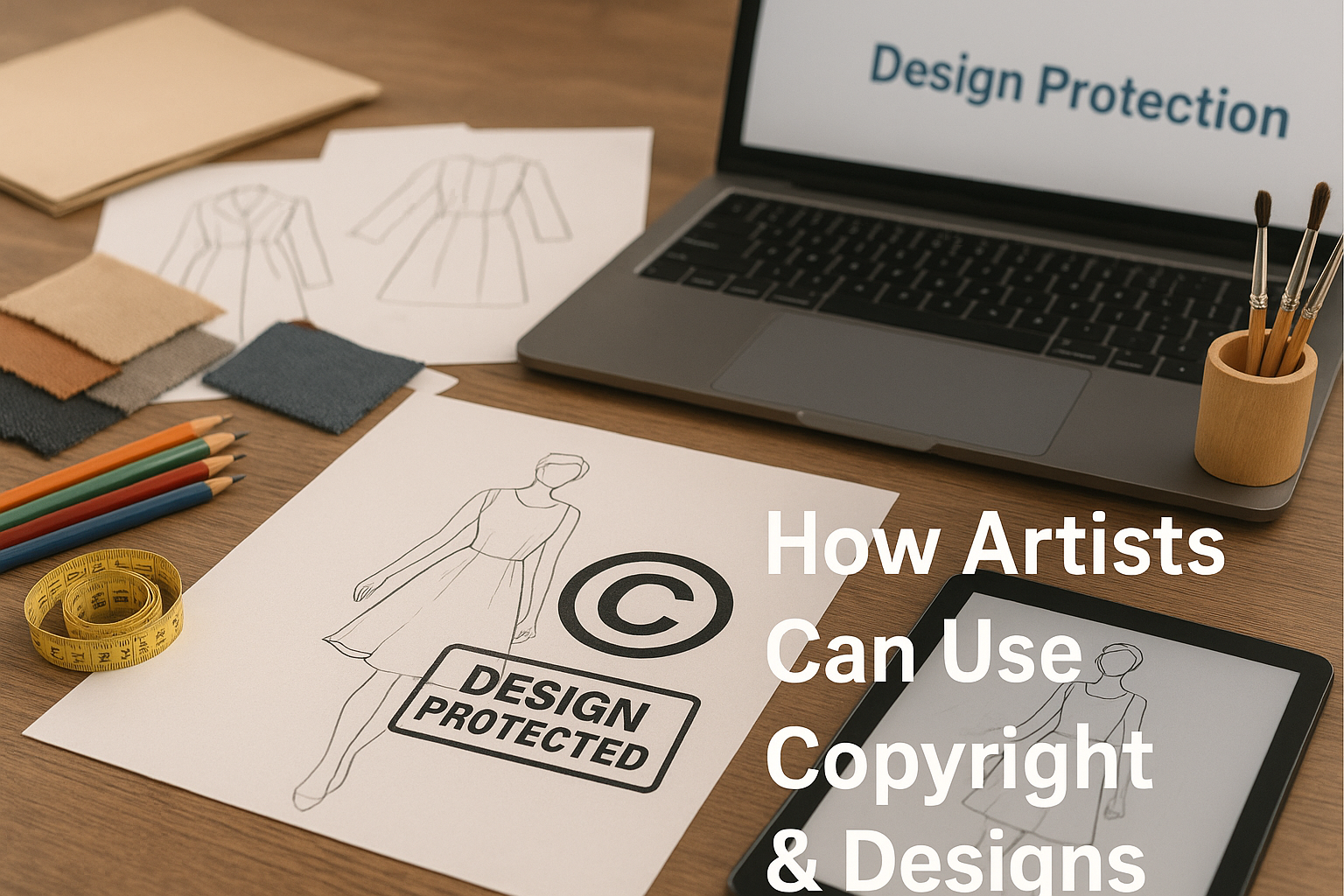
In Nigeria, copyright and design rights are the primary intellectual property (IP) tools available to protect artistic works and creative output. An artist who understands and strategically uses these rights is better positioned to safeguard their work, commercialize it, and enforce their interests when infringement occurs.
Copyright
Copyright protects original artistic works such as paintings, drawings, sculptures, photographs, and other creative expressions. In Nigeria, protection arises automatically once the work is created and expressed in a fixed form — for example, once a sketch is drawn, a painting is made, or a digital artwork is saved. There is no requirement to register copyright for it to exist, although works can be deposited with the Nigerian Copyright Commission (NCC) for evidentiary purposes.
The author of the work is usually the first owner of copyright. This right may be exploited in two main ways:
- Licensing – the artist permits another person or company to use the work under agreed terms (e.g., scope of use, duration, territory, and payment).
- Assignment – the artist transfers ownership of copyright, whether in exchange for a fee or under contract.
Copyright is infringed when a substantial part of the work is copied without authorisation. What constitutes a “substantial part” depends on the quality and importance of what was taken, not necessarily the quantity. Artists should also be cautious when creating works inspired by or based on existing copyrighted material, as derivative works may themselves amount to infringement.
Designs
Nigeria also provides protection for designs through the Patents and Designs Act. A design is registrable if it is new and relates to the features of shape, configuration, pattern, or ornament applied to an article by an industrial process. For example, textile patterns, product packaging, or decorative elements may be protected as designs.
Unlike copyright, design protection in Nigeria requires registration with the Trademarks, Patents and Designs Registry. Once registered, a design enjoys an initial term of five years, renewable for two further consecutive five-year periods, up to a maximum of 15 years. The registered design owner has the exclusive right to control its commercial exploitation, and infringement occurs where another person, without consent, reproduces or applies the registered design.
Unregistered designs (such as sketches, drafts, or patterns not filed at the Registry) do not enjoy the same strong protection. Artists relying on unregistered rights may find enforcement more difficult and should keep dated records of creation to prove originality and ownership.
Enforcement
When an artist’s copyright or registered design is infringed in Nigeria, remedies include:
- Cease-and-desist letters sent to infringers;
- Takedown requests for online infringement;
- Civil actions seeking damages, injunctions, or delivery-up of infringing copies;
- Criminal prosecution in serious cases, particularly under the Copyright Act.
Registered designs are generally easier to enforce, since ownership can be demonstrated through the certificate of registration. By contrast, for unregistered rights, the burden is on the artist to prove authorship, originality, and date of creation.
FAQs
1. Do I need to register my copyright in Nigeria?
No, copyright is automatic, but voluntary registration with the NCC provides additional proof of ownership.
2. What is the difference between copyright and design rights?
Copyright protects the artistic expression (paintings, illustrations, music, etc.), while design rights protect the visual appearance of products (patterns, shapes, ornamentation).
3. Can I sell or transfer my rights?
Yes. Both copyright and design rights can be licensed or assigned, but it is essential to have written contracts to avoid disputes.
4. What should I do if someone copies my design or artwork?
Gather evidence, preserve records, and contact an IP lawyer immediately to assess your options.
How Cardinal Counsel Can Help
At Cardinal Counsel, we work with Nigerian and African creatives to:
- Register your copyrights and designs.
- Draft and negotiate licensing and assignment agreements.
- Enforce your rights through cease-and-desist notices, takedowns, and litigation.
- Advise on commercialising your work without losing control of it.
📩 Get in touch today:
Email: info@cardinalcounsel.co
Website: www.cardinalcounsel.co
Conclusion
For Nigerian artists, copyright automatically protects their creative works, while registered design rights offer additional protection for the appearance of applied patterns, shapes, and ornamentation. Both rights can be valuable commercial assets if properly managed, licensed, or assigned.