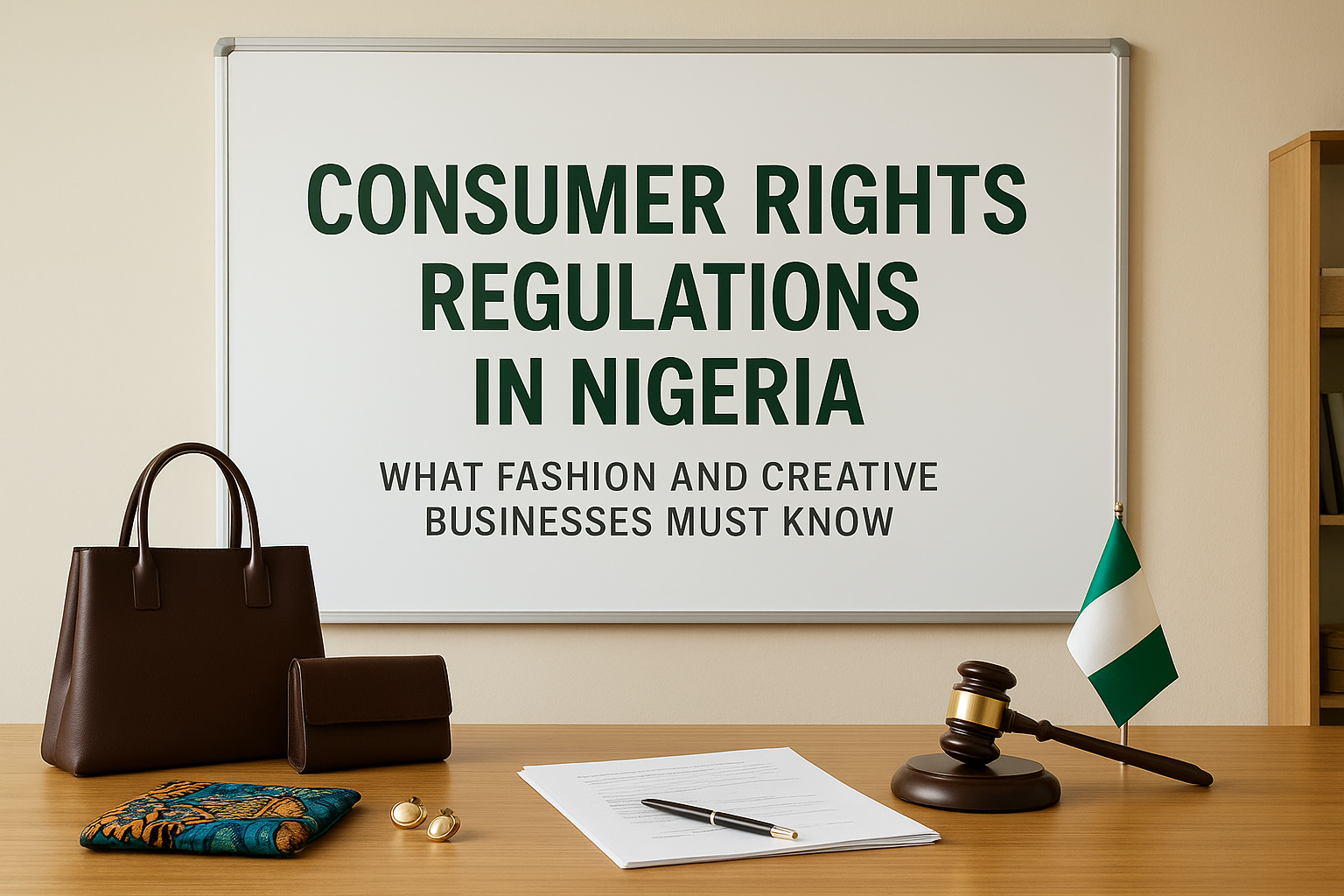
Consumer trust is the lifeblood of any successful business. In Nigeria’s fast-growing fashion and creative industries, where reputation and brand loyalty often determine success, understanding consumer rights regulations is not just a legal requirement—it is a competitive advantage.
From luxury clothing labels and independent designers to e-commerce platforms and fashion retail outlets, businesses are increasingly under scrutiny to ensure compliance with Nigerian consumer protection law. Failure to comply with consumer rights regulations in Nigeria can lead to financial penalties, lawsuits, or reputational damage that many fashion brands cannot afford.
This article provides a comprehensive summary of consumer rights regulations in Nigeria, with a focus on what they mean for fashion and creative businesses. It also highlights practical steps for compliance and the critical role legal guidance plays in navigating this complex area.
Overview of Consumer Rights in Nigeria
Under Nigerian consumer protection law, every consumer is entitled to a set of fundamental rights. These rights are designed to ensure fair treatment, product safety, and accountability in the marketplace. The Federal Competition and Consumer Protection Act (FCCPA) 2018 is the primary legislation governing consumer protection in Nigeria, supplemented by sector-specific regulations.
Key consumer rights in Nigeria include:
- Right to Safety – Consumers are entitled to protection against hazardous goods and services. In fashion, this covers harmful textiles, unsafe dyes, or poorly made accessories that pose health risks.
- Right to Information – Businesses must provide accurate and clear information about products, including fabric composition, size guides, care instructions, and warranties.
- Right to Choice – Consumers should have access to a variety of goods and services at competitive prices without coercion or unfair trade restrictions.
- Right to Fair Value and Quality – Products sold must meet expected standards of durability, quality, and performance. For fashion brands, this means avoiding deceptive advertising or passing off low-quality items as premium.
- Right to Redress – Consumers have the right to seek compensation, replacement, or refund for defective goods or unsatisfactory services.
- Right to Consumer Education – The FCCPC and other regulators are tasked with educating consumers about their rights. Businesses must therefore ensure transparency and avoid exploiting consumer ignorance.
Key Laws and Regulatory Frameworks
The Federal Competition and Consumer Protection Act (FCCPA) 2018 consolidated consumer protection under one umbrella, establishing the Federal Competition and Consumer Protection Commission (FCCPC) as the apex regulator.
Other important frameworks include:
- Standards Organisation of Nigeria (SON) – regulates quality standards for goods, including textiles.
- Nigerian Communications Commission (NCC) – for digital/online consumer issues.
- Advertising Regulatory Council of Nigeria (ARCON) – ensures advertising is truthful and not misleading.
- National Agency for Food and Drug Administration and Control (NAFDAC) – regulates safety of textiles, dyes, and cosmetics used in fashion.
Together, these frameworks create a comprehensive consumer protection ecosystem in Nigeria that every fashion and creative business must understand.
Consumer Rights and the Fashion Industry
While consumer rights apply across industries, certain areas are particularly relevant to fashion and creative businesses:
1. Advertising and Marketing
False or exaggerated advertising is a common consumer rights issue. Fashion businesses must avoid misleading claims such as “100% silk” when the product is polyester or claiming “limited edition” when items are mass-produced.
2. Product Quality and Safety
Consumers expect safe and durable products. For example, children’s clothing must not contain hazardous dyes or choking hazards. Accessories and jewelry must meet safety standards, especially when in contact with skin.
3. Returns and Refunds
Nigerian consumer protection law gives consumers the right to refunds or replacements when goods are defective. Fashion e-commerce platforms must implement clear refund policies aligned with the FCCPA.
4. E-Commerce and Online Fashion Retail
With the rise of Instagram shops, online boutiques, and digital marketplaces, compliance with e-commerce consumer protection in Nigeria is critical. Businesses must ensure transparent pricing, accurate product images, secure payments, and clear delivery timelines.
5. Warranties and Guarantees
Consumers are entitled to warranties for purchased goods. Fashion businesses offering luxury or premium products must clearly state warranty terms and honor them when defects arise.
Duties of Businesses Under Nigerian Consumer Protection Law
For fashion and creative businesses, compliance with consumer rights regulations in Nigeria requires fulfilling specific duties, including:
- Honest Disclosure – Provide accurate product information, including fabric type, country of origin, and usage instructions.
- Avoiding Unfair Trade Practices – Refrain from price-fixing, deceptive sales promotions, or unfair discount schemes.
- Data Protection in E-Commerce – Respect consumer privacy when collecting data online and comply with Nigeria Data Protection Act.
- Dispute Resolution – Establish clear internal mechanisms for handling consumer complaints before they escalate to regulators or litigation.
Consequences of Non-Compliance
Ignoring consumer protection laws can result in:
- Regulatory Sanctions – FCCPC has the power to fine businesses, seal premises, or mandate recalls.
- Financial Loss – Compensation claims, refunds, and penalties can cripple small fashion businesses.
- Reputational Damage – In the digital age, consumer complaints spread rapidly on social media, potentially damaging brand trust.
- Litigation – Non-compliance exposes businesses to lawsuits that can drain resources and distract from growth.
Practical Steps for Fashion & Creative Businesses
Fashion businesses can strengthen compliance with Nigerian consumer protection law by adopting the following steps:
- Draft Clear Consumer Policies – Including returns, refunds, and warranties.
- Train Staff and Vendors – Ensure everyone from sales staff to delivery partners understands consumer rights.
- Review Marketing Materials – Avoid misleading or exaggerated claims.
- Audit E-Commerce Platforms – Ensure secure payments, transparent pricing, and data protection.
- Work with Legal Counsel – Engage fashion law experts like Cardinal Counsel to ensure contracts, policies, and operations comply with the FCCPA.
Conclusion
Understanding and complying with consumer rights regulations in Nigeria is essential for fashion and creative businesses. Beyond avoiding penalties, compliance builds trust, strengthens brand reputation, and enhances customer loyalty.
In a competitive fashion landscape, businesses that respect consumer rights are more likely to stand out, retain customers, and achieve long-term growth.
How Cardinal Counsel Can Help
At Cardinal Counsel, we specialize in guiding fashion, creative, and lifestyle businesses through the complexities of Nigerian consumer protection law. Our expertise in fashion law in Nigeria and creative industry regulation means we understand both the legal and practical realities of running a fashion business.
Whether you need help drafting refund policies, reviewing advertising campaigns, or ensuring your e-commerce platform is compliant, Cardinal Counsel is your trusted legal partner.
Reach out today to protect your brand, safeguard your consumers, and strengthen your business in Nigeria’s evolving fashion and creative industries.